

Letting agent website design: winning landlords, not just tenants.
What a letting agent website needs to win landlords: a fee-transparent landlord page, the compliance signals the law expects in England and Wales, a tenant route and costs from £675 +VAT.
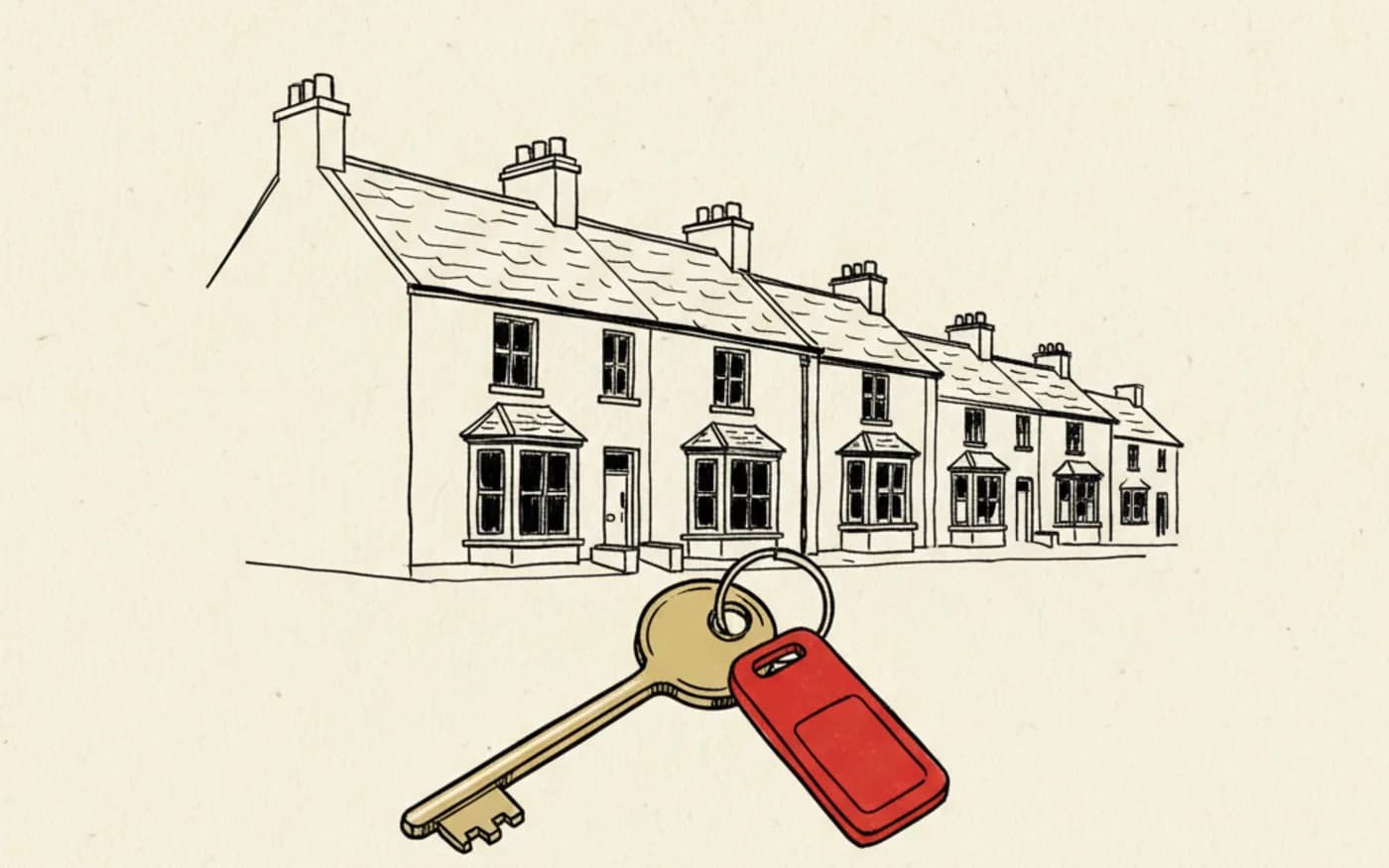
A letting agent website has one customer and one audience, and they are not the same person. Tenants browse it, landlords pay for it, and a managed let pays every month for years, so the site that wins instructions is the one built around the landlord page, with fees, compliance and proof laid out so plainly that a landlord in Swansea or Newport can choose you in one visit. This guide covers what that page needs, the compliance a letting website must show on each side of the England and Wales border, the tenant route, what it costs, and how to win the "letting agent plus town" searches that bring landlords to you rather than to the portals.
The landlord pays, the tenant browses: who the website is really for
Most letting agent websites are built for the wrong visitor. They open with a property search, because that is what the template came with and what tenants want, and they bury the landlord services two clicks deep under "About". Yet tenants almost never arrive through the agent's own site; they arrive through Rightmove, Zoopla and OpenRent, and the agent's site is a formality they pass through on the way to a viewing. Landlords are the opposite. A landlord choosing an agent searches Google, reads three websites, and instructs the one that answered their questions without a phone call.
The commercial logic settles the design. A sales instruction pays once; a managed let pays a percentage of rent every month, often for several years, and brings renewals, inspections and maintenance margin with it. The page that wins that relationship deserves more thought than the page that lists the flat. So the structure of a good letting agent website is simple: the landlord route is the headline, the tenant route is clear and efficient, and the two never share a page.
The landlord page, built as a sales page
The landlord page is where instructions are won or lost, and it needs four things in a fixed order. The first is your service options side by side, with the fee for each shown as a percentage and as pounds on a typical local rent, because fee transparency is both a legal requirement and the first thing a landlord comparing three agencies looks for. A table does it best.
| Service | What the landlord gets | Typical UK fee shape |
|---|---|---|
| Let only | Marketing, viewings, referencing, the contract, move-in | A one-off fee, often around half to a full month's rent plus VAT |
| Rent collection | Let only, plus rent chased and paid over monthly | A smaller monthly percentage of rent plus VAT |
| Fully managed | Everything above, plus inspections, maintenance, compliance, renewals and the difficult conversations | A monthly percentage of rent plus VAT, higher than rent collection |
Put your own figures in, state VAT, and show the sums on a real rent: "fully managed on an £850 a month flat costs you £X a month" converts far better than a percentage on its own. The second thing is the compliance you take off the landlord's plate, listed specifically rather than as "we handle the legal side": gas safety, electrical checks, EPC, deposit protection, right-to-rent checks in England, and in Wales the Rent Smart Wales obligations that fall on the landlord unless a licensed agent carries them. The third is proof drawn only from your own figures: how many properties you manage, your average time to let, your arrears rate, how long your average contract runs. The fourth is a rental valuation form that asks for a postcode and a bedroom count and nothing else, because a landlord who has to fill in ten fields rings the agent down the road instead.
If you would rather have this built than brief it, our web design service starts every property site from the landlord page, with published prices and no lock-in.
The compliance your website must show, England and Wales side by side
A letting agent's website is not just marketing; parts of it are legally required, and the rules differ on each side of the border. Getting them right on the website is also a trust signal, because landlords and tenants increasingly check. This is the position as of November 2026.
| Requirement | England | Wales |
|---|---|---|
| Fee schedule on the website | Required under the Consumer Rights Act 2015, with what each fee is for and the amount including VAT | Same requirement; tenant-side fees are mostly banned, so the schedule is landlord-facing |
| Redress scheme | Must name your scheme: The Property Ombudsman or the Property Redress Scheme | Same |
| Client money protection | Must publish your CMP certificate if you hold client money | Not the same statutory website duty; say truthfully what protection you hold |
| Agent licensing | No single licence | A Rent Smart Wales licence is mandatory for letting and management work; show the number |
| Tenancy wording | Assured shorthold tenancies and the Tenant Fees Act 2019 | Occupation contracts and contract-holders under the Renting Homes (Wales) Act, with the Welsh fees ban |
The practical rule is to give compliance its own clearly labelled page or footer block: fees, redress scheme name and membership, CMP certificate where it applies, Rent Smart Wales licence number for Welsh work, and a plain explanation of occupation contracts for Welsh landlords, many of whom still think in tenancies. An agent working across the border in Monmouthshire or Flintshire needs both sets of wording, because a fee a tenant can be charged in England is not automatically permitted in Wales. None of this is a developer's legal advice; it is a checklist of what the site has to carry, and a good build makes each item easy to keep current.
The tenant route: efficient, mobile and out of the way
Tenants do need a route, and the standard to hit is efficiency rather than persuasion. In Wales they are contract-holders, and the website should use that language in its forms and FAQs. The route has four stops: available properties fed automatically from your CRM so nothing is listed twice or left up after it lets, a clear application process that says what documents are needed before anyone starts, a maintenance-reporting page that works on a phone at eleven at night with a photo upload and a plain statement of response times, and a documents area or portal link for contracts, statements and certificates.
The maintenance page matters more than it looks. It is the page an existing contract-holder uses most, it is the one that generates the out-of-hours calls when it is missing, and a good one reduces the admin that eats into a managed-let margin. If your CRM provides a tenant portal, link to it prominently; if it does not, a well-built reporting form with the right fields does most of the job.
Portals, CRM and the feed that keeps listings honest
Your properties should live in one place and appear everywhere. Lettings CRMs such as Alto, Reapit, Jupix, Goodlord and Arthur either feed listings to your website through an API or export them in a format a developer can read, and the same feed sends them to Rightmove, Zoopla and OnTheMarket. The website should never be a second place to type a property in. When a build is quoted, the listings feed is the line that moves the price most, because every CRM speaks a slightly different dialect and the integration has to be tested against real properties with real photos.
Portal badges on the website earn their place for a different reason than tenants assume: a landlord reading your site wants to know their property will be on Rightmove, and the badge answers that in a glance. The portal is the shop window; your website is where the landlord decides who gets the keys.
A managed let pays every month for years. The page that wins it deserves more thought than the page that lists the flat.
Winning the "letting agent plus town" searches
Landlords search by place: letting agent Swansea, letting agents Bridgend, property management Cardiff. Those searches are where your website earns its keep, and three things win them together. A Google Business Profile in the letting agent category, not the estate agent category, with reviews that mention management rather than sales, because the map pack takes a large share of these clicks and it ranks on category and reviews. Area pages for the towns you genuinely cover, each with its own copy about the local rental market, rather than one page listing thirty place names. And landlord-facing guides, on the Welsh fees ban, on occupation contracts, on what a licensed agent does for a landlord under Rent Smart Wales, because those are the questions a landlord types before they type your name, and the agent who answers them is the one they remember.
We can see the demand from the inside. Our own Search Console shows letting agent website searches reaching this site more than three hundred times a quarter, landing on our estate agent guide, before this page existed, and far more landlords are typing "letting agent" plus a Welsh town than are typing anything about sales. That is the gap a lettings-led website is built to fill. If you handle sales as well, our estate agent website design guide covers the vendor side, and the two sit together on one site with a header that splits them cleanly.
What a letting agent website costs
| Route | Typical cost | What you actually get |
|---|---|---|
| DIY website builder | £10 to £30 a month | A template with a property search; the landlord page is whatever you write yourself |
| Template agency site | £500 to £1,500 | A property theme filled in for you, usually with the listings feed as an extra and the compliance pages left to you |
| Our Essential build | £675 +VAT | Up to five pages: the landlord page as a sales page, compliance, a tenant route and a valuation form, for a lettings agency that does not need a listings feed on its own site |
| Our Professional build | £1,350 +VAT | Up to ten pages, with the CRM listings feed, area pages and the stronger search setup the "letting agent plus town" pages need |
| Our Bespoke build | From £4,000 +VAT | Portals, landlord and tenant dashboards, multi-branch structures and anything that touches money or logic |
Against those figures, a single lettings instruction at typical South Wales rents is worth £500 to £1,500 in management fees over its first year, so a Professional build pays for itself on one or two landlords it would not otherwise have won. Every price is on our pricing page, with monthly plans from £39 +VAT for hosting, security and updates and no lock-in contract. We have built the two-audience structure this guide describes for firms that sell to procurement teams and homeowners at the same time; the lettings version is the same discipline with a landlord in the first seat.
The plain next step
If your website opens with a property search and hides your fees, it is working for tenants you did not need to win and ignoring the landlords you did. The fix is a site built around the landlord page, with compliance shown properly for England or Wales, a tenant route that reduces your admin, and area pages that win the town searches. Ring 07916 214843 or start from the web design service page: published prices, a straight answer within a working day, and you deal directly with Jack from the first call to launch, with no obligation to go further.
Rather have this handled?
Everything in this guide is what we do all day for Welsh businesses: custom-coded sites, local SEO and a listing that stays busy.
Frequently asked questions.
A landlord page built as a sales page with service options and fees, a compliance page with your fee schedule, redress scheme and licensing, a tenant route for applications and maintenance reporting, properties fed from your CRM, and area pages for the towns you cover.
Yes. Under the Consumer Rights Act 2015 a letting agent with a website must publish its relevant fees there, saying what each is for and the amount including VAT. In Wales most tenant fees are banned, so the schedule is mainly landlord-facing.
Agents doing letting or management work in Wales need a Rent Smart Wales licence and should show the number, tenancies are occupation contracts with contract-holders under the Renting Homes (Wales) Act, and the Welsh fees ban means tenant charges that are allowed in England may not be charged in Wales.
DIY builders run £10 to £30 a month and template agency sites £500 to £1,500. With us, a lettings site without a listings feed is £675 +VAT, a Professional build with the CRM feed and area pages is £1,350 +VAT, and portals or dashboards sit in Bespoke from £4,000 +VAT, each with a monthly plan from £39 +VAT.
Usually yes. Alto, Reapit, Jupix, Goodlord and Arthur all offer feeds or exports, so properties added once appear on your site and the portals automatically and come down when they let.
Jack Warner
Founder, WebDev Wales · 1 November 2026

No obligation, replies within 24 hours
Rather have it handled for you.
Reading about local SEO is free. So is the quote for having every bit of it done properly, every month.