
Pub website design: passing the 9pm test that fills tables.
What a pub, bar or inn needs online: live hours, real-text menus, bookings that work at 9pm and a site that carries the atmosphere, from £675 +VAT with published prices.
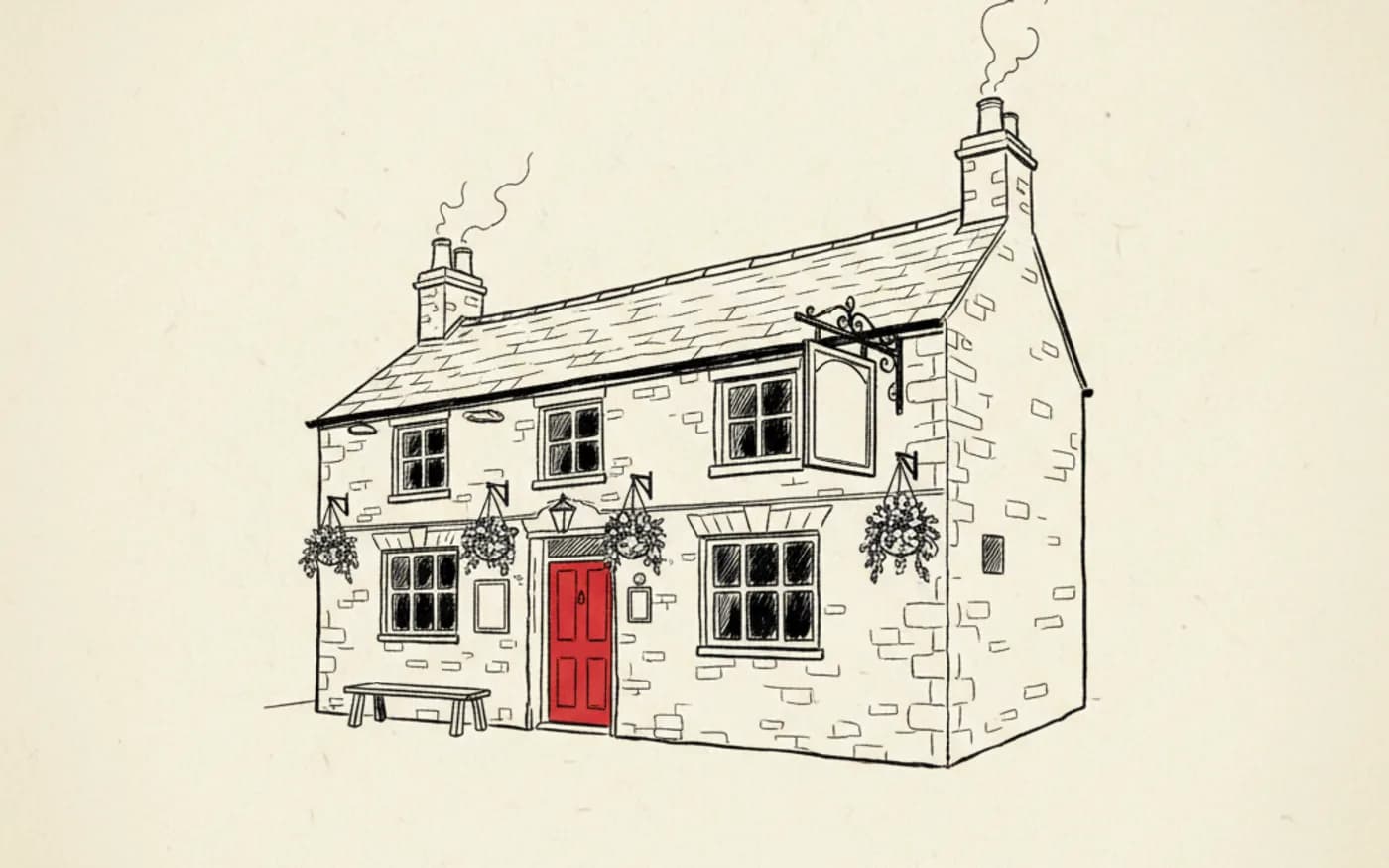
A pub website has one job: answering "shall we go there tonight?" in under ten seconds, with today's hours, the menu and the way to book all one tap deep. Most Welsh pub websites fail that test, and plenty of good pubs have no website at all, which is why the ones that get it right collect bookings their rivals never see. We build for hospitality venues, including a cocktail bar whose site drove a measurable rise in reservations, and this guide covers what a pub, bar or inn actually needs online, what it costs, and when a Facebook page genuinely is enough.
The 9pm test every pub website should pass
Pub customers decide late and decide on their phones. The couple choosing where to eat tonight, the group sorting Sunday lunch this morning, the away fans looking for somewhere showing the match: all of them will give your website seconds, not minutes. The test is brutal and simple: from a cold search, can a stranger find tonight's opening hours, the current menu, and how to book or find you, without pinching, squinting or downloading anything?
Sites that pass share a shape. The essentials live at the top of the first screen: open now or not, food service times, a booking route and a phone number that dials on tap. Everything else, the story, the events, the rooms, earns its place below. Sites that fail usually fail the same three ways: a PDF menu designed for print, opening hours that have not been true since Christmas, and a gallery of the refurbishment instead of an answer to "can we eat there at 8?"
Wrong opening hours cost more than no website at all
Hours deserve their own section because pubs are punished for them like no other business. Kitchens close earlier than bars, Sundays differ from Saturdays, bank holidays differ from both, and a customer who drives out to a closed door does not blame themselves: they leave a one-star review and never return. A pub website must treat hours as live information, not decoration, and they must match what Google shows.
We learned how much this matters building the site for Ivy Lane Cocktail Bar in Torquay: the build includes real-time opening hours on the site itself, so the answer a customer sees is always the answer that is true, and it agrees with the Google listing rather than contradicting it. The same discipline applies to your Google Business Profile: the map listing and the website reinforcing each other is a ranking signal and a trust signal at once, and it is exactly the kind of upkeep our web design service builds in rather than leaving behind.
The menu is the website
For a food pub, the menu is not a page on the site; functionally, it is the site. It is what most visitors came to see, it is what Sunday lunch searchers compare, and it is where the PDF sin costs most: a print menu uploaded as a download is unreadable on a phone, invisible to Google, and stale the day the kitchen changes a dish. Menus belong on proper pages, in real text, with prices, updated the day they change.
Real-text menus also carry your differentiators to the people searching for them. Ivy Lane runs Devon's only entirely gluten-free kitchen with zero cross-contamination, and the website says so prominently, because "gluten free food near me" is a search made by people who have been let down everywhere else, and answering it wins their loyalty for good. Every pub has some version of this: the smokehouse menu, the vegan Sunday roast, the local suppliers, the beer garden that takes dogs. If the menu pages do not say it, the searchers who wanted exactly that never find you.
Bookings: phone-only is a slow leak
Plenty of pubs take bookings only by phone, and every unanswered lunchtime ring is a table that books somewhere else. The fix does not need to be complicated. For venues on a reservation platform, the booking widget belongs in the site itself: Ivy Lane's build integrates Dishcult reservations directly, and the bar reports a significant increase in reservations since launch, especially from gluten-free diners the site was designed to reach.
"The website perfectly captures our 1920s botanical atmosphere. It has driven a significant increase in reservations, especially from those seeking our gluten-free menu." · Ivy Lane Cocktail Bar
For pubs without a platform, a simple booking form with a promised reply time beats the phone-only route, and even a "book a table" button that opens a pre-filled text message is better than hoping someone is free to answer during service.
Atmosphere is the product, so the website has to carry it
People do not choose a pub the way they choose a plumber; they are buying an evening, and the website either conveys the feel of the place or it loses to the pub whose website does. This is a design job, not a photography count. Ivy Lane's site is built dark, in deep navy botanical tones, because the venue is a 1920s Art Deco cocktail bar and the website should feel like walking in. By The Mine, a coal-mine-themed bistro group with two sites in the Neath Valley, carries its industrial atmosphere through a thirty-plus image gallery of food and interiors, backed by the 5-star hygiene rating that reassures the other half of the audience.
The practical version for any pub: a dozen honest, current photos, taken in good light, of the rooms, the food and the garden, presented on a site whose colours and type feel like the venue. No stock imagery, ever: a stranger can smell a stock photo of a roast dinner from a search results page.
Events, quiz nights and the match
The pub calendar is a search asset most sites waste. Quiz night, live music, open mic, the six-nations screenings, the Christmas menu: each is something people actually search for with a place name attached, and each deserves a page that stays current. The trick is structure rather than effort: recurring events live on pages you update, not posters uploaded as images, so "quiz night" plus your town finds you every week rather than never.
Rooms change the sums entirely. An inn with letting rooms is competing with booking platforms that take 15 to 20 percent commission on every stay, and a website that takes direct bookings claws that margin back with every guest. If rooms are part of your trade, the website stops being a marketing expense and becomes revenue infrastructure.
What a pub website costs
| Route | Typical cost | The honest trade-off |
|---|---|---|
| Facebook page only | Free | Fine for regulars; invisible to visitors and Google searches |
| DIY website builder | £10 to £30 a month | You do the work; hours and menus usually go stale |
| Template build | £300 to £800 | Looks like every other pub site; slow on mobile |
| Custom build with us | From £675 +VAT | Built around your menu, hours, bookings and feel; £39 +VAT monthly keeps it hosted and maintained |
The comparison worth making is not between these rows; it is between any of them and one quiet Tuesday. A pub taking £15 a head does not need many extra tables a month to cover a professionally built site, and the bookings a website wins are the ones your competitors' phones never rang for. Our prices are all on the pricing page, published rather than quoted.
When a Facebook page genuinely is enough
Honesty cuts both ways. A wet-led village local with a fixed crowd, no food and no rooms probably does not need a website: an active Facebook page with current hours and photos serves the regulars and costs nothing, and we have said exactly that to enquirers before now. Our guide to the website-versus-Facebook decision draws the line properly.
The line moves the moment you want customers who do not already know you: food service, Sunday lunches, events you want strangers at, rooms, or a location with passing trade. Facebook posts do not rank on Google, and visitors searching "pub with food near me" will only ever find the pubs with pages Google can read.
Last orders
If your pub, bar or inn is fielding "are you open?" calls, losing Sunday bookings to the place up the road, or paying commission on room bookings a direct site could take, the fix is a website built around the way venues actually get chosen: hours that are true, menus that are readable, bookings that work at 9pm. Ours start at £675 +VAT with every price published, the bar and bistro builds in our portfolio are live to visit, and you deal with Jack directly throughout, the same way Ivy Lane and By The Mine did. Start with the web design service or ring 07916 214843; the first conversation is free and there is no obligation at the end of it.
Rather have this handled?
Everything in this guide is what we do all day for Welsh businesses: custom-coded sites, local SEO and a listing that stays busy.
Frequently asked questions.
DIY builders run £10 to £30 a month, template builds £300 to £800, and a custom professional build from £675 +VAT with us, with the £39 +VAT monthly plan covering hosting, SSL, backups and upkeep. A pub taking £15 a head covers that with a handful of extra tables a month.
A wet-led local with a fixed crowd may not. The line moves when you want strangers: food, Sunday lunches, events or rooms. Facebook posts do not rank on Google, so searchers looking for a pub with food near them only find venues with real websites.
Live opening hours including kitchen times, menus as real text pages with prices, a booking route that works during service, honest current photos, directions, and pages for the things people search: Sunday lunch, quiz night, live sport, rooms.
No. PDFs are unreadable on phones, invisible to Google and stale the day the kitchen changes. Menus belong on proper pages in real text, which is also how dietary searches like gluten free food near me ever find your kitchen.
Yes, and for inns it is the strongest financial case for a website: booking platforms take 15 to 20 percent commission on every stay, so each direct booking through your own site is margin recovered.
Jack Warner
Founder, WebDev Wales · 13 August 2026
Keep reading.

No obligation, replies within 24 hours
Rather have it handled for you.
Reading about local SEO is free. So is the quote for having every bit of it done properly, every month.