
Hair and beauty salon website design UK.
Online booking, before-and-after galleries and local SEO for salons and beauty businesses.
The UK hair and beauty industry is worth £5.8 billion, employing nearly half a million people across 49,000 salons nationwide. Yet a staggering number of these businesses still rely entirely on Instagram DMs, Facebook messages, and phone calls to manage bookings. Here is the uncomfortable reality: 71% of regular salon clients have decided not to book because it was too hard to reach someone or book online. That is real money walking out the door every single day.
Whether you run a hair salon in Cardiff, a barbershop in Swansea, a beauty clinic in Newport, or a nail bar in Bridgend, your website is no longer optional, it is the digital front door of your business. With 80% of salon clients now preferring to book via their smartphones and 46% of all bookings happening outside business hours, a salon without a website is leaving thousands of pounds on the table every year. This guide covers everything you need to know about creating a salon website that looks stunning, books clients automatically, and helps new customers find you on Google.
Why Instagram alone stops working for salons
If you are thinking 'my Instagram page is enough', you are not alone, but you are missing out. Social media is brilliant for showcasing your work and building a community, but it has fundamental limitations that cost salons real revenue. Instagram's algorithm decides who sees your posts. Facebook can suspend your page overnight. Neither platform lets clients book appointments at 11pm on a Tuesday when they suddenly decide they need a fresh colour before the weekend.
The numbers tell the story clearly. Small businesses with websites grow roughly twice as fast as those without. 84% of UK SMEs with websites report it plays a big part in their business success. Meanwhile, 31% of consumers have decided against using a small business specifically because it lacked a website. In an industry as competitive as hair and beauty, with an estimated 2,300 to 2,500 salons across Wales alone, a professional website is the difference between being found and being forgotten.
Consider what happens when someone new to your area searches 'hair salon near me' on their phone. That single phrase receives over 3.3 million searches every month in the UK. 76% of people who search 'near me' on their phone visit a related business within 24 hours, and 28% of those searches result in a purchase. If your salon does not appear in those results because you do not have a website, those clients are walking straight to your competitors who do.
What belongs on a salon website
Not every salon website needs to be complex. But every salon website needs to do certain things exceptionally well. Based on our experience building websites for beauty businesses and the latest industry data, here are the features that actually drive bookings.
Online booking system
This is non-negotiable in 2026. 72% of salons have already adopted online booking, and the ones that have not are losing clients to those that have. An integrated booking system lets clients choose their service, pick their preferred stylist, select a date and time, and confirm, all in under 60 seconds, at any hour of the day or night. Remember: 46% of all salon bookings happen when the salon is closed. Without online booking, those are missed appointments.
The business benefits extend beyond convenience. Online first-time bookings return for a second visit 78% of the time compared to just 39% for walk-ins, roughly double the retention rate. Automated confirmation emails and SMS reminders reduce no-shows by up to 89%. The average salon loses £6,864 per year to no-shows alone. A mid-sized salon reducing no-shows from the typical 20% down to 5% can recover approximately £31,200 per year. The booking system pays for itself many times over.
Service menu with transparent pricing
Price transparency is the single biggest factor in a client's decision to book. If someone has to phone or message to find out how much a balayage costs, many simply will not bother, they will book with the salon that displays pricing clearly on their website. Your service menu should list every treatment with a clear description, duration, and price.
Organise services into logical categories: cuts, colour, styling, treatments, extensions, nails, beauty treatments, and so on. Include enough detail that clients know exactly what they are booking. For services where pricing varies (such as colour work depending on hair length), provide a clear starting price with a note explaining what affects the final cost. This transparency builds trust and reduces time spent answering pricing enquiries.
Before-and-after gallery
In hair and beauty, your work is your best advertisement. A well-curated gallery of before-and-after transformations does more to convince potential clients than any amount of written copy. High-quality photos showing real results on real clients build trust and demonstrate your skill level in a way nothing else can.
Organise your gallery by service type, colour transformations, balayage, precision cuts, bridal styles, nail art, skin treatments, so visitors can quickly find examples relevant to what they want. Add brief descriptions noting the techniques used. Keep adding new work regularly to show that your skills are current and your salon is busy. This gallery also doubles as powerful SEO content when images include keyword-rich alt text like 'balayage hair colour transformation Swansea salon'.
Meet the team page
Salon services are deeply personal. Clients are trusting someone with their appearance, and they want to know who will be working on them before they arrive. A team page with professional photos, brief bios, specialties, and experience levels helps clients choose the right stylist and feel comfortable before they even walk through the door.
Include each team member's qualifications, years of experience, and areas of expertise. If a stylist specialises in curly hair, vivid colours, or bridal styling, highlight this. Many clients search specifically for specialists, 'curly hair specialist Cardiff' or 'balayage expert Swansea', and individual stylist profiles help you rank for these valuable long-tail searches.
Client reviews and social proof
85% of consumers trust online reviews as much as personal recommendations. Displaying your Google reviews, Facebook reviews, or testimonials prominently on your website builds instant credibility. Do not hide these on a separate reviews page, weave them throughout your site, particularly on service pages and near booking buttons where they influence decisions at the critical moment.
If you have a strong Google rating, say 4.7 stars across 200 reviews, display it boldly on your homepage. Link to your Google Business Profile so visitors can verify the reviews are genuine. For salons with awards, magazine features, or celebrity clients, showcase these as additional trust signals. Social proof converts hesitant browsers into confident bookers.
Instagram feed integration
Most salons are already active on Instagram, so leverage that content on your website. An embedded Instagram feed on your homepage or gallery page shows your latest work without requiring you to update two platforms separately. It also signals to visitors that your salon is active and busy, an empty or outdated website creates the opposite impression.
The key is making Instagram complement your website, not replace it. Instagram drives engagement and brand awareness; your website handles booking, pricing, SEO, and converting visitors into paying clients. Together they form a complete digital presence that is far more effective than either alone.
Online booking platforms: which one is right for your salon?
Choosing the right booking platform is one of the most important decisions for your salon website. Here is an honest comparison of the most popular options available to UK salons in 2026.
Fresha is used by over 450,000 professionals worldwide and starts at just £9.95 per month per staff calendar. The catch is a 20% commission on new marketplace clients and 2.19% plus 20p per card transaction. It scores 4.8 out of 5 from users and offers 107 features including client management, marketing tools, and point-of-sale. It is excellent value for solo stylists and small salons, though the commissions add up as you grow.
Timely starts at £21 per month per calendar with no marketplace commissions, what you see is what you pay. It integrates well with accounting software like Xero and QuickBooks, scores 4.7 out of 5 from users, and offers 88 features. It is the best choice for salons wanting predictable costs with strong business management tools.
Booksy operates a large marketplace with over 35 million customers who actively search for local beauty services. It offers 24/7 online booking, automated reminders that reduce no-shows by up to 25%, and direct integration with Facebook, Instagram, and Google Reserve. For salons wanting to attract new clients through the platform's built-in marketplace, Booksy offers strong discovery potential.
Treatwell charges £29 to £49 per month plus a 35% commission on first-time bookings from their marketplace. It has a strong European presence and good client acquisition tools but charges the highest commissions of the major platforms. It works best for salons in busy urban areas wanting marketplace visibility and willing to pay a premium for new client acquisition.
Salon website prices across the UK
Understanding realistic pricing helps you budget properly and avoid both overpaying and under-investing. Here is what salon websites actually cost in the UK market.
A basic salon website displaying your services, team, gallery, contact details, and location typically sits at the entry level of the market. This works well for solo stylists and small salons wanting professional online presence with a link to an external booking platform like Fresha or Booksy. You get a beautiful, mobile-responsive site that helps clients find you and learn about your services.
A mid-range salon website with integrated booking, before-and-after galleries, team profiles, Instagram feed, and local SEO optimisation costs more. This is the sweet spot for most established salons wanting to drive bookings directly through their website while ranking well in local search. It includes everything needed to compete effectively online.
A full-featured salon website with e-commerce for product sales, gift voucher systems, loyalty programmes, multi-location management, and advanced booking features sits at the higher end. Larger salons and salon groups with retail revenue streams and complex booking requirements benefit from this level of investment.
At WebDev Wales, our salon packages start at Essential from £675+VAT for a polished professional presence, Professional from £1,350+VAT with booking integration and local SEO, and Bespoke from £4,000+VAT for salon groups with e-commerce and advanced features. Every package includes a monthly plan covering hosting, SEO, maintenance, and support. We build using Next.js for lightning-fast loading speeds, critical when 80% of your visitors are on mobile phones with variable connection speeds. Our transparent pricing means no hidden fees, and all sites include SSL security and ongoing support.
Hair salon vs beauty salon vs barbershop: design considerations
Hair salons
Hair salon websites thrive on visual impact. Your gallery is everything, stunning colour transformations, precision cuts, and textured styles shot in good lighting will do the heavy lifting. Feature your colour work prominently as colour services typically represent the highest revenue per appointment. Include a dedicated page for bridal and special occasion styling if you offer it, as brides are among the most valuable clients who book months in advance and often bring their entire wedding party.
Hair salons should also consider seasonal content. New year, new look promotions in January. Festival-ready styles in summer. Christmas party prep in November. A blog or news section covering seasonal trends keeps your website fresh for both visitors and Google's search algorithm.
Beauty salons and spas
Beauty salon and spa websites need to convey relaxation and luxury from the moment someone lands on the page. Clean design, calming colour palettes, and aspirational imagery of your treatment rooms set the tone. Detailed treatment descriptions matter more here than in hair salons, clients want to understand exactly what a dermaplaning facial involves, how long a hot stone massage takes, and what results they can expect.
Gift vouchers are a significant revenue stream for beauty salons and spas. Make them easy to purchase directly from your website with the option to email them instantly or post a physical card. Many beauty treatments are bought as gifts, birthdays, Mother's Day, Christmas, and a smooth online voucher purchase process captures impulse buyers who might otherwise put it off.
Barbershops
Barbershop websites tend to work best with bold, masculine design, strong typography, darker colour schemes, and clean lines. The emphasis should be on the craft: sharp fades, beard sculpting, hot towel shaves. Many barbershops have a strong community feel, so showcasing your shop's personality and atmosphere matters as much as the haircuts themselves.
Walk-in availability is more common in barbershops than salons, so consider displaying current wait times or a simple queue management system on your website. Price lists should be straightforward, barbershop clients expect transparent, uncomplicated pricing. If you sell grooming products, a simple online shop integrated into your website adds a secondary revenue stream.
Getting chosen for "salon near me"
Having a beautiful salon website is pointless if nobody can find it. Local SEO, optimising your site to appear when people search for salons in your area, is the single most important marketing investment for hair and beauty businesses. 97% of search engine users search online to find a local business, and 93% of web sessions start with a search engine.
Start with your Google Business Profile. This free listing controls how your salon appears in Google Maps and the local 3-pack, those three businesses that appear at the top of local search results. The local 3-pack receives 44% of all clicks on the results page. Customers are 70% more likely to visit a business with a complete profile and 2.7 times more likely to consider it reputable. Fill in every field: services, opening hours, photos, and encourage clients to leave Google reviews.
On your website, target location-specific keywords naturally within your content. Your homepage should mention your town or city. Create service pages that include location terms, 'balayage Cardiff', 'barbershop Swansea', 'nail salon Newport'. Use schema markup to help search engines understand your business type, location, opening hours, and services. Consistent NAP information (Name, Address, Phone) across your website, Google Business Profile, and local directories reinforces your local presence.
Service-specific pages targeting long-tail searches can capture high-intent clients. Someone searching 'keratin treatment specialist Bridgend' knows exactly what they want and is ready to book. Create individual pages for your key services, each optimised for your location, and you will capture these valuable searches that your competitors relying solely on social media simply cannot rank for.
Mobile-first design: why it matters even more for salons
Over 80% of salon clients browse and book from their smartphones. This is not a trend, it is the reality of how people find and interact with salon businesses. Your website must be designed mobile-first, meaning the mobile experience is the primary design consideration, not an afterthought squeezed down from a desktop layout.
What does mobile-first mean in practice? Buttons are large enough to tap with a thumb. Text is readable without zooming. The booking button is visible without scrolling. Phone numbers are clickable for instant calling. Gallery images load quickly without chewing through mobile data. Navigation is simple and intuitive. Forms are short and easy to complete on a touchscreen. If your current website requires pinching and zooming on a phone, you are actively turning away the majority of potential clients.
Page speed matters enormously on mobile. 53% of visitors abandon sites that take longer than three seconds to load. A salon website heavy with unoptimised images, unnecessary animations, or bloated code frustrates impatient mobile users who will simply close the tab and try the next salon in search results. Every fraction of a second counts.
The mistakes that cost salons bookings
After reviewing hundreds of salon websites, certain mistakes appear repeatedly. Avoiding these pitfalls can dramatically improve your website's effectiveness.
Relying on social media instead of a website is the most expensive mistake. When Instagram changes its algorithm (which it does regularly), your visibility drops overnight. When Facebook decides to reduce organic reach for business pages (which it has, repeatedly), your carefully built following sees fewer of your posts. A website you own cannot be taken away or algorithmically suppressed. It is your digital property that works for you 24/7, 365 days a year.
Hiding your prices is a close second. Some salons worry that showing prices will scare clients away or help competitors undercut them. The reality is the opposite, hidden pricing scares away far more clients than transparent pricing ever will. People want to know what they are committing to before they contact you. Those who cannot find your prices will simply book with a salon that displays theirs.
Using stock photos instead of real work destroys trust instantly. A potential client lands on your website, sees stunning stock images of models with perfect hair, then visits your Instagram and sees a completely different style and quality. That disconnect kills credibility. Use photos of your actual work, shot in your actual salon. Authenticity always beats perfection.
Neglecting your website after launch is remarkably common. A salon website from 2022 with outdated pricing, team members who left two years ago, and a gallery that has not been updated since launch sends a clear message: this business does not care about its online presence. Keep your website current, update prices, add new portfolio work, refresh team photos, and post seasonal promotions.
Making booking difficult is the ultimate conversion killer. If a client has to fill in a 15-field form, create an account, verify their email, and then wait for a confirmation phone call, they will not book. Reduce friction to the absolute minimum: choose service, pick time, enter name and phone number, done. Every additional step you add loses a percentage of potential bookings.
The revenue impact: what a professional website actually delivers
Let us talk numbers, because ultimately your website needs to pay for itself. Salons that launch professionally designed websites typically see a 300% increase in website traffic within their first year. More importantly, salons adopting digital booking systems see revenue growth of 10 to 34% in their first year, with comprehensive all-in-one solutions achieving the higher end.
The maths is straightforward. A salon with 500 monthly website visitors and a 3% conversion rate books 15 new clients per month. At an average appointment value of £60, that is £900 per month or £10,800 per year in new client revenue, from a website that cost relatively little to build. Factor in that online first-time bookings return 78% of the time versus 39% for walk-ins, and the lifetime value of each website-acquired client is roughly double that of a walk-in.
Then there is the no-show reduction. The average UK salon loses £6,864 per year to no-shows. Automated reminders through your booking system can cut no-shows by up to 89%. A salon that goes from a 20% no-show rate to 5% recovers thousands of pounds in revenue that was previously evaporating. Combined with the new client acquisition, a professional website delivering online booking is comfortably the highest ROI investment most salons can make.
Case study: Rewind Time Aesthetics
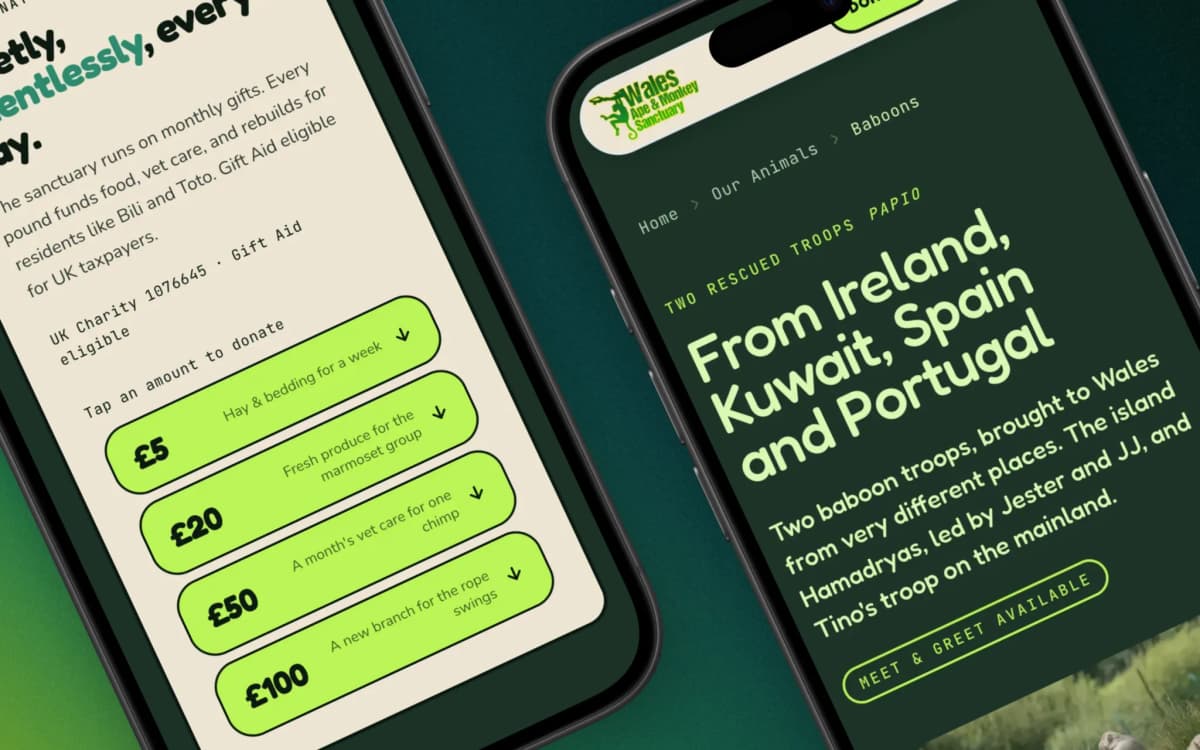
Theory is valuable, but real results are what matter. Rewind Time Aesthetics is a beauty and aesthetics clinic we built a website for that demonstrates the impact of professional web design in the beauty industry. The site was designed mobile-first with a focus on treatment showcasing, trust building through before-and-after galleries, and seamless booking integration.
The website features detailed treatment pages for each service, from dermal fillers and anti-wrinkle treatments to skin rejuvenation, each optimised for local search terms. The design conveys the clinical professionalism and luxury experience that aesthetics clients expect, while keeping navigation intuitive and the booking process frictionless. Client testimonials and before-and-after results feature prominently throughout the site.
Launching your salon site without the drama
If you currently have no website, the priority is getting online with a professional presence that handles the basics brilliantly: who you are, what you offer, how much it costs, and how to book. Claim and fully optimise your Google Business Profile, it is free and immediately improves your visibility in local searches. Then invest in a proper salon website that converts visitors into booked appointments.
If you have an outdated website, test it honestly. Pull it up on your phone, can you find the booking page in under five seconds? Are your prices current? Is your team page accurate? Does it load quickly? Search for your salon name plus your town on Google, do you appear? If any answer is no, it is time for a rebuild rather than patches on an ageing foundation.
If you have a decent website but want better results, focus on high-impact improvements first. Add or upgrade your online booking system. Invest in professional photography of your best work. Create service-specific pages optimised for local searches. Request Google reviews from every satisfied client. These targeted improvements can transform performance without a complete rebuild.
Ready when you are
At WebDev Wales, we understand the hair and beauty industry. We have built websites for aesthetics clinics, beauty businesses, and service-based companies across Wales that deliver real results, more bookings, stronger local search visibility, and professional online presence that matches the quality of your in-salon experience.
Whether you need a complete new salon website, want to add online booking to your existing site, or need help getting found on Google, we are here to help. Our transparent packages start at Essential from £675+VAT, with Professional from £1,350+VAT and Bespoke from £4,000+VAT, each with a monthly plan covering hosting, SEO, maintenance, and support.
Get in touch for a no-obligation chat about your salon website. Visit our pricing page to find the package that suits you, or browse our services to see how we help beauty businesses get online. Your salon deserves a website that works as hard as you do, let us make it happen.
Serving salons across Wales including Cardiff, Swansea, Newport, Bridgend, Neath, Pontypridd, and all surrounding areas. We are based in South Wales and available for face-to-face consultations to discuss your project in person.
Rather have this handled?
Everything in this guide is what we do all day for Welsh businesses: custom-coded sites, local SEO and a listing that stays busy.
Frequently asked questions.
Instagram is brilliant for showcasing work, but the algorithm decides who sees your posts and clients cannot book at 11pm. A website you own handles booking, pricing and Google visibility, and 31% of consumers have decided against a small business purely because it lacked one.
Fresha starts at £9.95 per month and suits solo stylists, though marketplace commissions add up. Timely from £21 per month has no commissions and strong business tools, Booksy offers a large marketplace for attracting new clients, and Treatwell charges the highest commission at 35% on first-time marketplace bookings.
At WebDev Wales, salon packages start at Essential from £675+VAT, Professional from £1,350+VAT with booking integration and local SEO, and Bespoke from £4,000+VAT for salon groups with e-commerce. Every package includes a monthly plan covering hosting, SEO, maintenance and support.
Jack Warner
Founder, WebDev Wales · 14 February 2026
No obligation, replies within 24 hours
Rather have it handled for you.
Reading about local SEO is free. So is the quote for having every bit of it done properly, every month.