

Who owns your domain name? How to check, and how to take control.
How to check who really owns your business's domain name in two minutes, why designer-owned domains go wrong, and the steps to take yours back.
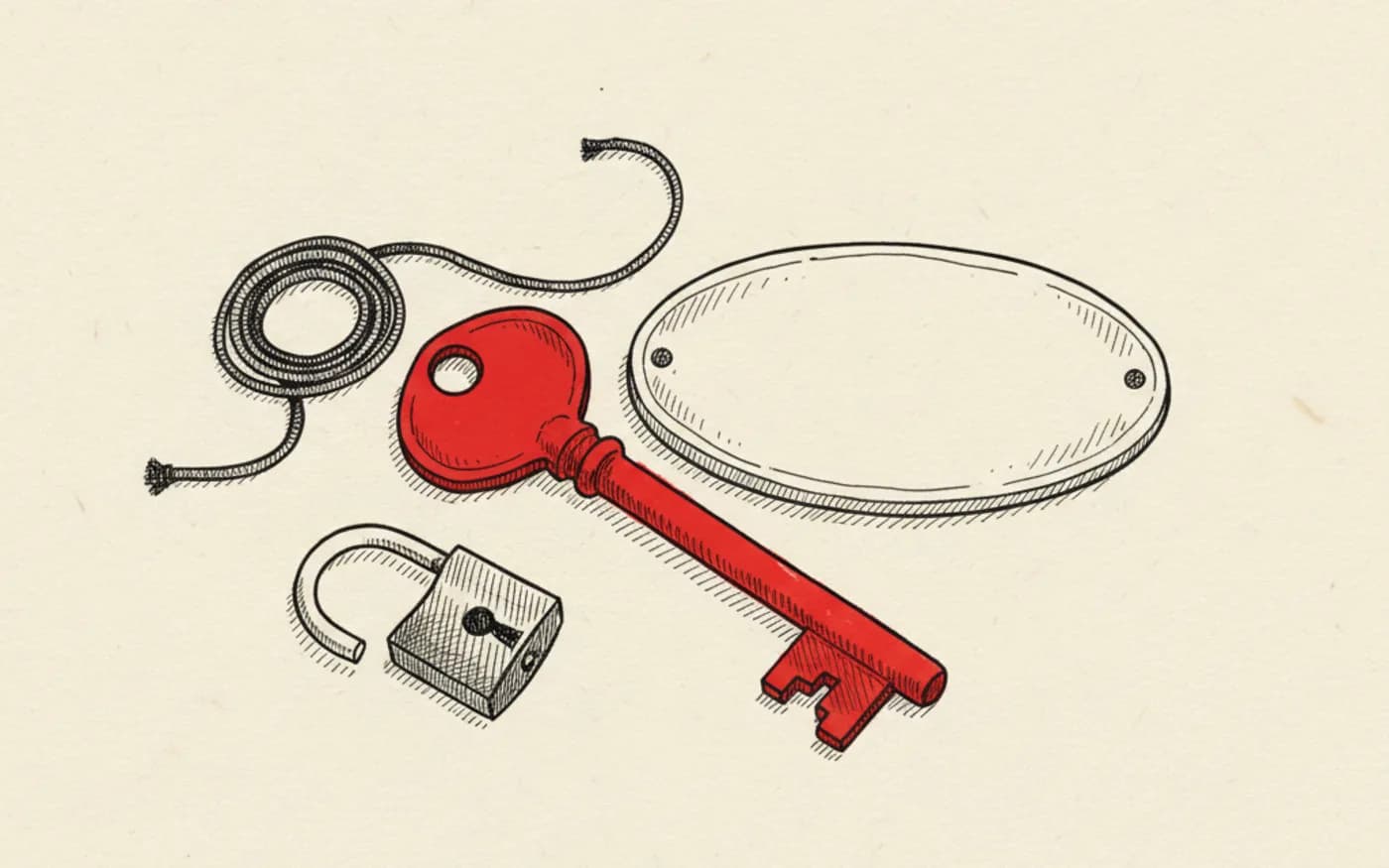
To find out who owns your domain name, look it up in a WHOIS search: Nominet's lookup for .uk domains, or any registrar's WHOIS tool for .com and the rest. Even where privacy rules hide the owner's name, the result still shows which company the domain is registered with and when it expires, which is most of what you need. For a worrying number of Welsh small businesses the honest answer is "my old web designer owns it", and that is a problem worth fixing this week rather than the week the relationship sours.
Check it now: the two-minute lookup
Type your own web address into a WHOIS lookup and read three lines: the registrar (the company the domain lives with), the expiry date, and, where visible, the registrant (the legal owner). For .uk domains Nominet's WHOIS is the official source; for .com and other endings any of the big registrars offer a lookup. Since GDPR most personal registrant details are redacted, but the registrar and expiry date always show.
What you are hoping to see: a registrar you recognise, an account you or someone in your business can log into, and an expiry date comfortably in the future. What you are hoping not to see: a registrar you have never heard of, an expiry date nobody is watching, or a strong suspicion that the only login belongs to someone you stopped working with in 2019.
Domain, hosting, website: three different things
Most domain confusion comes from conflating three things that are bought separately and can live with three different companies.
The domain is the address: your name on the internet's register, rented yearly for roughly £10 to £20. The hosting is the land: the server your site's files sit on, with its own pricing games covered in our guide to what website hosting really costs. The website is the building: the design and code itself. A business can own its domain, rent hosting from one company, and have had its website built by another, and that is completely normal. It also means "my web company handles all that" can hide the important question: handles it in whose name? The address is the only one of the three you cannot rebuild from scratch, because your search rankings, your email and your printed vans all point at it.
The designer-owns-it problem
Here is the pattern we see: a business had a site built years ago, the designer registered the domain "to keep things simple", and every renewal since has happened invisibly on someone else's card. While the relationship is good, nothing goes wrong. When the designer retires, disappears or falls out with you, your web address, and the email addresses on it, are legally in someone else's hands. Getting a domain back from an uncooperative or unreachable third party ranges from slow to impossible, and some providers use it as leverage to keep you from leaving.
The same trap has a modern edition: website builders and AI site platforms that "include" a domain in the subscription, registered by the platform, priced into the plan, and awkward to extract when you outgrow the tool, a lock-in our honest verdict on AI website builders covers in full. Whoever builds the site, the domain should sit in an account you control.
The fix is not dramatic: ask your current provider, in writing, to confirm which registrar the domain is with and whose name it is registered in, and to transfer it into your own account if it is not yours. A decent provider will do this without fuss. Our own published position is in our terms, in plain English: your domain name is yours; where we register it for you, we transfer it out free of charge, and your name, your content and the search history your domain has earned always leave with you. We wrote that clause because we kept meeting businesses that had been burned by the opposite arrangement.
Buying a domain properly in the UK
If you are starting fresh, buy the domain yourself, in your own account, before anyone builds anything. It takes ten minutes and removes the whole ownership question.
| Decision | The sensible answer |
|---|---|
| Which ending | .co.uk for a UK-facing business; add the .com if it is free |
| Where to buy | A mainstream registrar directly, not a reseller inside a design package |
| What to pay | Roughly £10 to £20 a year; treat much cheaper year-one offers as a renewal price question |
| How long | Multi-year where offered; it is cheap insurance against the renewal trap |
| Whose name | The business's, with a login two people in the business can access |
The registration email address matters more than people think: recovery links and renewal warnings go there, so never register a domain against an email address that itself runs on the domain, or against a personal address that leaves when a staff member does.
The renewal trap
Domains are rented, not bought, and an expired domain takes your website and your email down together, usually with no warning beyond the emails nobody was reading. After expiry comes a short grace window, then a redemption period with a chunky recovery fee, and eventually the domain returns to the open market, where dropped business domains get snapped up for their traffic. The defence is boring: auto-renew switched on, a payment card that is not about to expire, renewal notices going to an inbox someone actually reads, and ideally multi-year registration so one missed email cannot end your web presence. This is the sort of unglamorous upkeep our website maintenance plan exists to carry: the £39 +VAT monthly plan keeps the machinery of your site running so nothing lapses quietly.
A domain is the only part of your web presence you cannot rebuild. Sites can be redesigned and hosts can be swapped, but the address, and everything it has earned, has to be owned.
Taking a domain back: how transfers work
If your domain is currently in someone else's hands, the mechanics of moving it are simpler than the folklore suggests. For .uk domains, the current holder changes one setting, the IPS tag, to name your new registrar, and the domain follows within hours. For .com and most other endings, you need the domain unlocked and an authorisation code from the current registrar, and the transfer completes within days; be aware most non-UK endings cannot be transferred within 60 days of registration or a previous transfer. The person-level step matters more than the technical one: getting the current holder to cooperate. Do it while the relationship is friendly, put the request in writing, and treat any reluctance, stalling or surprise "release fee" as confirmation you are right to move.
Where the domain sits in our builds
Every website we build sits on a domain that belongs to the client, full stop. Bring an existing domain and nothing about its registration changes; ask us to register one and it is transferred to you on request, free, as our terms promise. The monthly plan then keeps hosting, SSL, backups and updates running underneath it. If you are not sure where your own domain actually lives, that is a five-minute conversation with no obligation attached: get in touch and we will help you read the WHOIS result, whoever you build with.
Rather have this handled?
Everything in this guide is what we do all day for Welsh businesses: custom-coded sites, local SEO and a listing that stays busy.
Frequently asked questions.
Run a WHOIS lookup: Nominet's official search for .uk domains, or any major registrar's WHOIS tool for .com and other endings. Owner details are often redacted under GDPR, but the registrar and expiry date always show, which tells you where the domain lives and how urgent the question is.
It is a risk. While the relationship is good nothing goes wrong, but the domain, and the email addresses on it, are legally in their hands. Ask in writing for it to be transferred into your own registrar account; a decent provider will do it without fuss.
Roughly £10 to £20 a year for a .co.uk or .com at a mainstream registrar. Treat very cheap first-year offers as a question about the renewal price, and consider multi-year registration as insurance against missed renewals.
Your website and email stop working together. A short grace period follows, then a redemption period with a recovery fee, and eventually the domain returns to the open market where dropped business domains get bought for their traffic.
For .uk domains the current holder sets the IPS tag to your new registrar and the domain moves within hours. For .com and most others you need the domain unlocked plus an authorisation code, and transfers complete within days. The real step is getting the current holder to cooperate, so ask in writing and early.
Jack Warner
Founder, WebDev Wales · 26 August 2026
Keep reading.

No obligation, replies within 24 hours
Rather have it handled for you.
Reading about local SEO is free. So is the quote for having every bit of it done properly, every month.