
Bespoke website design: what it really means and when it's worth it.
What bespoke website design genuinely means, when a template is honestly the better buy, UK price bands, and five questions that expose a reskin sold as bespoke.
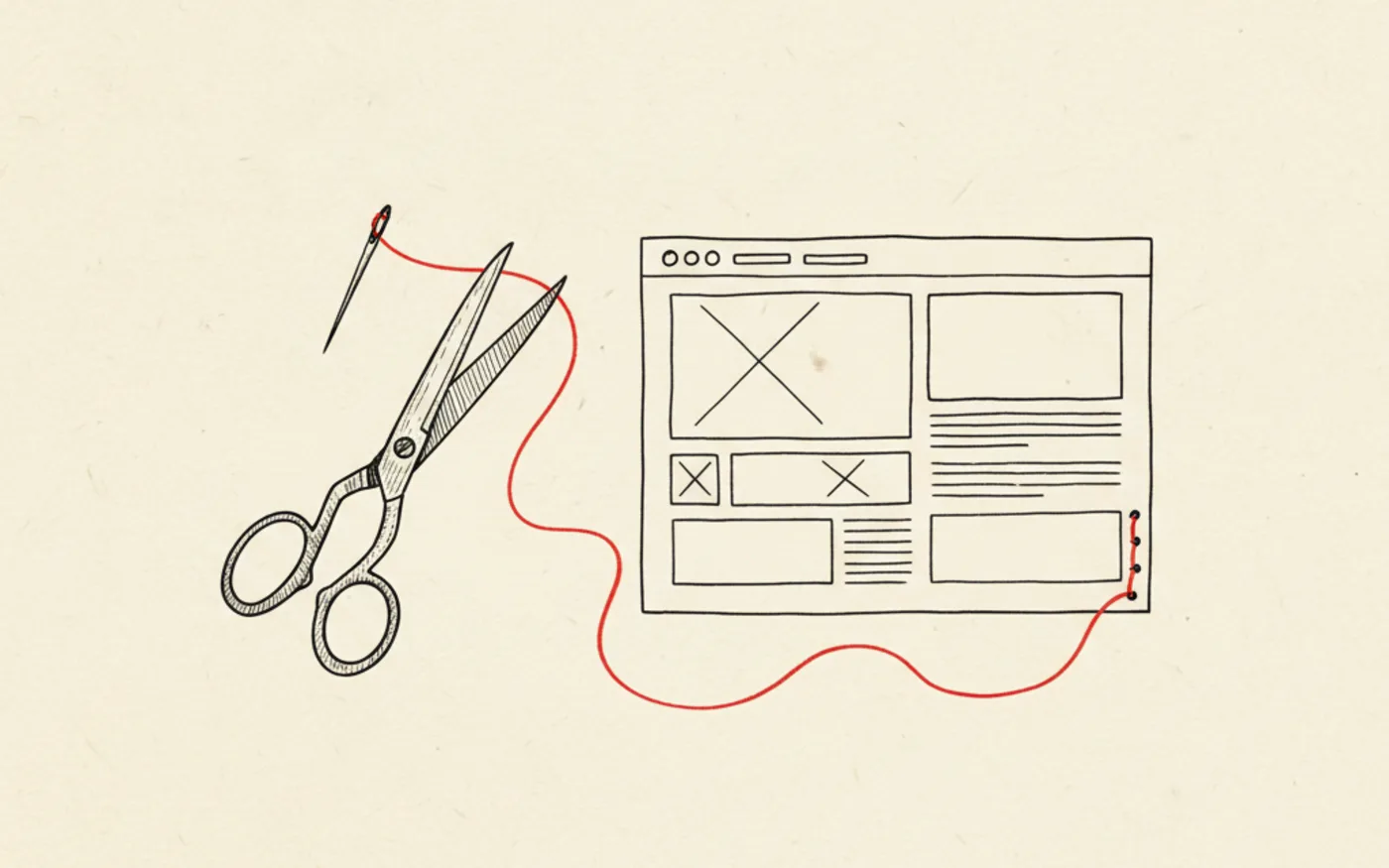
Bespoke website design means a site designed and coded for your business specifically: no theme bought off a shelf, no template with your logo swapped in. In the UK the phrase covers everything from a £1,500 custom small-business site to £20,000 agency projects, and with us it spans published prices from £675 +VAT for a custom-coded Starter to Bespoke builds from £4,000 +VAT. This guide explains what bespoke genuinely means, when a template is honestly the better buy, and how to tell whether a "bespoke" quote is the real thing or a reskin wearing the word.
What bespoke actually means, and what gets sold as it
A genuinely bespoke website starts from a blank page: someone studies your business, your customers and the searches you need to win, then designs and codes a site around exactly that. The layout exists because your content needed it, not because a theme shipped with it. The code contains what your site uses and nothing else.
What often gets sold as bespoke is different: a purchased theme, restyled. The colours change, your photos go in, and the underlying template, carrying code for every feature it supports and the same structure as thousands of other sites, stays. There is nothing wrong with buying that product knowingly; the problem is paying bespoke money for it. The word on the invoice is not evidence. The build process is: if nobody asked hard questions about your customers before showing you a design, you are probably looking at a reskin.
The honest case for a template
Bespoke is not always the right answer, and a guide pretending otherwise is selling, not advising. A template earns its place when the budget is genuinely a few hundred pounds, when you need something live this week, or when the site's job is modest: a menu, opening hours, a phone number. A well-chosen £300 template that exists beats a £3,000 bespoke site that stays "in planning" for a year.
The template's costs arrive later and quietly: the weight of unused features slows every page, the structure limits what ranks, and the moment you need something the theme does not do, you are paying a developer to fight someone else's code. Templates suit businesses whose website is a noticeboard. They suit businesses whose website is meant to win customers rather less.
What bespoke actually buys
Strip the mystique and bespoke buys four concrete things. Speed, because the site carries only its own code: every site we build loads in under a second, which template stacks rarely manage. Search structure, because pages get built around the queries your customers actually type rather than a theme's generic sections. Conversion detail, because the route from arriving to enquiring gets designed for your specific customer instead of inherited from a demo. And independence, because there is no plugin stack to update, break or secure, which is where most small-business site trouble starts.
If you want the outcome without adopting a project, this is precisely our web design service: custom-coded at every tier, designed around your customers, from £675 +VAT with the prices published.
Bespoke features: where the word earns its money
The clearest way to see bespoke value is in features no template ships with, and our own portfolio shows the pattern. Bramwood Timber sells garden buildings that people want to configure before they buy, so instead of a checkout their site got a quote builder that turns browsing into structured, priceable enquiries. LM Carpentry Wales serves five towns with one business, so the site runs a single quote system routed across dedicated town pages. Rewind Time Aesthetics lived on Booksy bookings, so their build wove the booking system into a site that finally matched the standard of the clinic itself.
None of those exist in a theme store, because theme stores cannot know your business. That is the test worth applying to your own project: if everything your website needs is generic, a template can carry it; the moment the thing that would actually win you customers is specific to how you trade, you are in bespoke territory.
A template is someone else's answer to an average business. Bespoke is your answer to your customers, and the difference shows up in the enquiries, not the screenshots.
What bespoke website design costs in the UK
| Route | Typical UK cost | What you get |
|---|---|---|
| Template, self-assembled | £10 to £40 a month | A builder subscription and your evenings |
| Template, professionally installed | £300 to £800 | A reskinned theme, quick and serviceable |
| Bespoke small-business site | £1,500 to £5,000 | Designed and coded for you, at freelancer and studio rates |
| Bespoke agency project | £5,000 to £20,000+ | Workshops, strategy phases and larger teams |
| Our custom-coded builds | £675 to £1,350 +VAT | Every tier designed and coded from scratch, no templates at any price |
| Our Bespoke tier | from £4,000 +VAT | Larger scope: e-commerce, custom features, bigger sites |
The oddity in the UK market is the middle: plenty of studios charge bespoke prices for template work, while custom-coded work at the small-business end is rarer than the invoices suggest. Our structure is deliberately simple: everything we build is custom-coded, the word Bespoke on our pricing page marks scope rather than method, and every number is published before you ever speak to us.
What a bespoke build actually looks like, week by week
Demystifying the process removes most of its imagined cost. A bespoke small-business build with us runs two to six weeks, and the shape is consistent. The first week is discovery done properly but without theatre: what you do, who buys it, what they search for, what the site must achieve, and gathering the content, which is almost always the bottleneck worth attacking early. Design follows, with agreed revision rounds on real pages rather than abstract mood boards. The build itself is where custom coding pays quietly: pages structured around your search terms, loading measured in milliseconds, forms and features built rather than installed. Launch week covers the technical checklist, from redirects and analytics to sitemap submission, so Google meets the new site properly on day one. Nothing in that process requires a workshop with sticky notes; it requires someone competent asking good questions and then building what the answers demand.
Already on a template and feeling the walls?
A common bespoke project is not a first website but an escape. The pattern repeats: a template served fine for two years, then the business needed a feature the theme could not carry, rankings plateaued behind the template's structure, or the site simply grew slow and dated as plugins accumulated. If that is where you are, the decision framework in our guide to the signs a website needs redesigning applies, with one addition: moving from template to bespoke is the one redesign that changes what the site can do rather than just how it looks. The search history your domain has earned comes with you, the content gets rewritten around what you now know customers actually ask, and the feature that triggered the move gets built properly instead of bolted on.
Five questions that expose a fake bespoke quote
Asking a provider these, politely, tells you almost everything. What did you need to learn about my customers before designing? A real answer describes research; a vague one describes a theme. Can I see two of your sites with completely different layouts? Reskins share bones. What happens when I need a feature you have not built before? "We'd code it" and "we'd find a plugin" are different businesses. Why is my site fast? Bespoke builders talk about what they left out; template sellers talk about caching plugins. And who owns what when we part ways? While you are at it, make sure the domain answer matches our guide to who owns your domain name, because bespoke code on a hostage domain is still a hostage situation.
Bespoke without the agency theatre
The stereotype attached to bespoke, months of workshops and five-figure invoices, is a property of agencies, not of the method. A custom-coded site for a Welsh trade or small business is a two-to-six-week job with one person doing the designing and the building. That is how we work: you deal directly with Jack from first call to launch, the process is the same whether the project is £675 or £4,000+, and 16 Google reviews at 5.0 sit behind the method. If you have been quoted bespoke money and template answers, or you simply want to know which side of the template line your project falls on, start the conversation: it is free, without obligation, and the prices you would be agreeing to are already public.
Rather have this handled?
Everything in this guide is what we do all day for Welsh businesses: custom-coded sites, local SEO and a listing that stays busy.
Frequently asked questions.
A site designed and coded specifically for your business: layout built around your content and customers, code containing only what your site uses. The opposite is a purchased theme restyled with your branding, which is a legitimate product at template prices but not bespoke.
Typically £1,500 to £5,000 from freelancers and small studios, and £5,000 to £20,000+ from agencies. With us every tier is custom-coded from £675 +VAT, and the Bespoke tier from £4,000 +VAT marks larger scope such as e-commerce and custom features rather than a different method.
Yes: when the budget is genuinely a few hundred pounds, when you need something live immediately, or when the site's job is simply opening hours and a phone number. The template's costs arrive later, in speed, search limits and the price of fighting someone else's code.
Ask what they needed to learn about your customers before designing, and ask to see two of their sites with completely different layouts. Vague research answers and same-bones portfolios are the tells; genuine bespoke builders can explain why your site is fast by describing what they left out.
Two to six weeks for a small-business site with us: discovery and content in the first week, design with agreed revision rounds, the custom build, then a launch-week technical checklist. Months-long timelines are a property of agency process, not of bespoke work itself.
Jack Warner
Founder, WebDev Wales · 8 August 2026
Keep reading.

No obligation, replies within 24 hours
Rather have it handled for you.
Reading about local SEO is free. So is the quote for having every bit of it done properly, every month.