
Roofing website design: winning the £8,000 re-roof, not just the leak call.
What a UK roofing website needs to beat the trade's trust problem: real job photos, a verifiable accreditation wall, storm-ready mobile speed and pages that rank town by town.
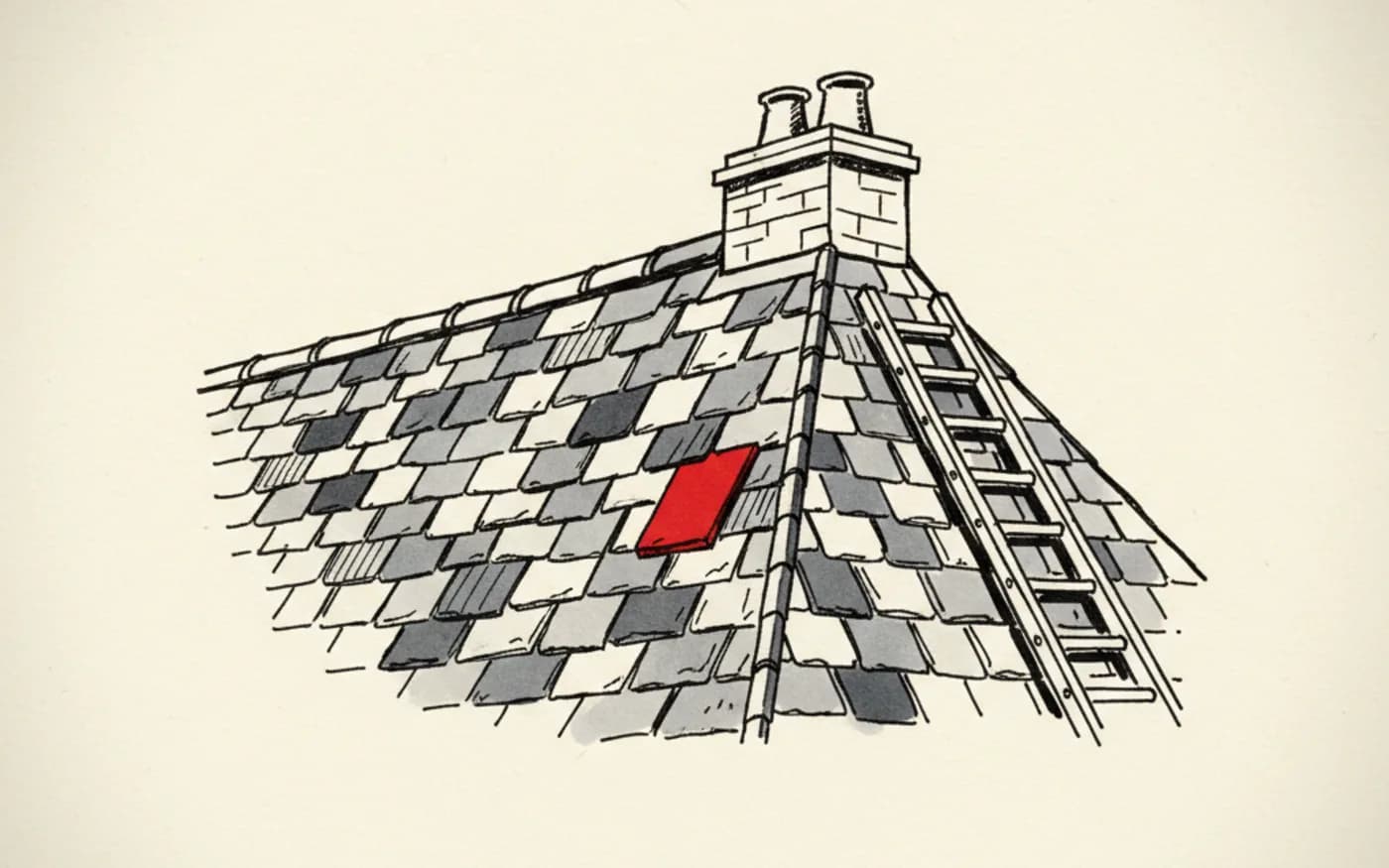
A roofing website has one job above all others: proving you are not a cowboy before you ever climb a ladder. Roofing carries the worst trust reputation of any UK trade, which means the roofer who shows real photos, real accreditations and real reviews online wins work from better roofers who show nothing. We know because we built the website for Wales Roofing Solutions in Neath, whose clients include NHS hospitals and TATA Steel, and this guide covers what their site does, what it costs to do properly, and what a roofing website needs to win both the £300 leak repair and the £8,000 re-roof.
Why roofing has a trust problem online, and why that is your opening
Every roofer inherits the same handicap: decades of rogue-trader stories, doorstep scammers after storms, and consumer programmes built on botched flat roofs. Homeowners know they cannot inspect the work themselves, most will never see their own roof close up, so they are buying almost entirely on trust, for one of the larger sums they will ever hand a tradesperson.
That is a burden, but online it is also the opportunity. Because customers are actively looking for reasons to trust or reject, a website that answers the fear directly, with named local jobs, dated photos, verifiable accreditations and reviews they can cross-check on Google, does not just present your business; it filters you into the shortlist while the competition's untouched template site filters them out. Most local roofing websites in Wales are exactly that: a template with stock photos of American shingle roofs no Welsh street has ever seen. The bar is low, which is precisely why clearing it properly pays.
Homeowners and procurement managers read the same site differently
The deepest design decision in a roofing website is who it serves, because roofing splits into two markets that buy in opposite ways. Homeowners buy on reassurance: they want to see finished roofs on houses like theirs, in towns they recognise, with reviews from people like them. Commercial and public-sector clients buy on compliance: a facilities manager or procurement officer needs your accreditations, insurance and comparable projects verified before you are even allowed into the conversation.
When we built the Wales Roofing Solutions site, this split drove the whole structure: commercial and domestic offerings are separated cleanly so each visitor finds their route in one click, industrial cladding and warehouse projects carry the scale credibility that big contracts demand, and the credentials sit where a site manager checking from a phone on scaffolding can find them in seconds. A one-size homepage that mixes gutter repairs with industrial roofing serves neither buyer; a site that routes them early serves both.
If you are weighing up a proper website for your own roofing business, our web design service is where that build started, with published prices and live examples rather than promises.
Proof beats promises: photos, projects and names
The strongest content on any roofing website is evidence, and roofing is blessed with photogenic evidence: before-and-after shots of a re-roof transform a house, and drone photography, now cheap to commission, shows completed work no customer could otherwise see. The discipline that matters is specificity. "Quality workmanship guaranteed" persuades nobody; "full slate re-roof, three-bed semi, Skewen, completed over four days in March" persuades, because it is checkable and local.
Named projects do the same work at commercial scale. Wales Roofing Solutions' site showcases work for the Princess of Wales Hospital and TATA Steel, and those two names do more for a procurement reader than any paragraph of sales copy, because a contractor trusted on an NHS site and a steelworks has been vetted by organisations with far stricter requirements than theirs. If you have named clients, name them (with permission); if you do not yet, dated local jobs with street-level detail are the domestic equivalent.
The accreditation wall that commercial work demands
For domestic customers, accreditations are reassurance. For commercial work, they are the entry ticket: many contracts cannot legally or procedurally go to an unaccredited contractor regardless of price. A roofing website chasing commercial work needs its credentials displayed, current and verifiable: CHAS, Constructionline, ISO 9001 and 14001, SafeContractor, manufacturer approvals for the systems you install, and the insurance cover levels commercial clients specify.
Wales Roofing Solutions carries ISO 9001, ISO 14001, CHAS and Constructionline Silver, and the site presents them as a wall of proof rather than a footnote, because we learned from building for construction firms that procurement managers verify credentials before they ever pick up the phone. The same logic, scaled down, applies to a sole trader: TrustMark membership, manufacturer-backed guarantees on flat roofing systems, and public liability insurance stated with its cover level all answer questions the customer was going to ask anyway. Our guide to construction company website design covers the procurement side of this in more depth.
"We had a fantastic experience working with Jack on our website. From start to finish he was professional, friendly, and helpful. He offered great ideas and suggestions that really improved the final result. We could not be happier with the service." · Bethan Parry, Director, Wales Roofing Solutions
Storm weeks are when the website earns its keep
Roofing demand in Wales is weather-driven, and every roofer knows the rhythm: a named storm crosses the country, and for a fortnight the phone becomes the business. Those customers search from a kitchen with a bucket on the floor, on their phones, and they call the first roofer who looks real and answers. For storm work your website needs three things above all: a phone number that is one tap away on every page, a load time under two seconds on a mobile connection, and your coverage area stated plainly so callers from the wrong side of the valley do not waste your evening.
The quieter counterpart matters just as much. Planned work, re-roofs, flat roof replacements, chimney work, fascias and guttering, is searched calmly and compared carefully, often months ahead. Each of those services deserves its own page with its own photos and its own honest guidance on cost ranges and timescales, because a dedicated flat-roofing page ranks for flat roofing searches in a way a generic services list never will.
What a roofing website costs in the UK
| Route | Typical cost | What you actually get |
|---|---|---|
| DIY website builder | £10 to £30 a month | A template you build yourself; fine as a placeholder, rarely ranks |
| Cheap template build | £300 to £800 | Someone else fills in the same template; stock photos, slow on mobile |
| Custom professional build | From £675 +VAT with us | Built around your jobs, your photos and your towns; from £1,350 +VAT for multi-service sites with galleries |
| Directory memberships | £70 to £150+ a month, forever | Leads shared with competing roofers; the platform keeps the relationship |
The comparison that matters is the last row against the others. Checkatrade and Mybuilder sell the same lead to several roofers and keep the customer relationship; a website on your own domain costs about a year of directory fees to build properly, then generates exclusive enquiries for years. Most established roofers we speak to run both for a transition period, then let the directory lapse as their own rankings take over. Every price we charge is on our pricing page, including the £39 +VAT monthly plan that keeps the site hosted, secure and maintained.
Getting found for roofer-plus-town searches
Local roofing searches follow one pattern: the trade plus the place. Roofer Neath, flat roofing Swansea, roof repairs Bridgend. Winning them takes three things working together. A Google Business Profile in the right category with steady reviews, because the map pack takes the emergency calls. Service pages that name the towns you genuinely cover, because Google matches pages to places. And the technical foundation, fast loading, mobile-first, proper page titles, that lets a local site outrank national lead-generation directories. One caution on that profile: keep the business name clean of bolted-on keywords, because names like "Best Roofer Swansea 24/7" are a leading cause of profile suspensions, and our suspension recovery playbook is a guide you want to never need.
We watch this work from the inside: searches for Wales Roofing Solutions reach even our agency site over two hundred times a season, which tells you how much branded search a well-established local roofer generates once the name is known. The pattern for getting there is the same one we apply across every trade we build for, and the best tradesman websites we have built show it live, roofing included.
For roofers whose site already exists, the ranking work alone is available through our SEO and performance service, and Neath valley firms can start from the web design in Neath page.
The plain next step
If your roofing business is buying leads it should own, or running on a template site you would rather customers did not judge you by, the fix is a website built around your proof: your photos, your accreditations, your towns. Ours start at £675 +VAT with published prices, every site loads in under a second, and you deal directly with Jack from first call to launch, the same way Wales Roofing Solutions did. Ring 07916 214843 or start with the web design service page; the first conversation costs nothing and you will get a straight answer about what your roofing business actually needs.
Rather have this handled?
Everything in this guide is what we do all day for Welsh businesses: custom-coded sites, local SEO and a listing that stays busy.
Frequently asked questions.
DIY builders run £10 to £30 a month, template builds £300 to £800, and a custom professional build from £675 +VAT with us, rising from £1,350 +VAT for multi-service sites with galleries. The honest comparison is against directory fees of £70 to £150 a month, forever, for shared leads.
Real photos of completed local roofs with dates and places, your accreditations and insurance stated verifiably, a page per service (flat roofing, re-roofs, repairs, fascias), the towns you cover, and a phone number one tap away on every page.
For commercial and public-sector work they are the entry ticket: many contracts cannot go to an unaccredited contractor at all. For domestic work, TrustMark, manufacturer-backed guarantees and stated insurance cover answer the trust question every homeowner is silently asking.
A Google Business Profile in the right category with steady reviews wins the map pack, service pages naming your genuine coverage towns win the organic results, and a fast mobile site holds both. Searches follow the pattern roofer-plus-town, so the site must speak that language.
Word-of-mouth customers still look you up before calling, and a bare Facebook page or no result at all loses referrals you never hear about. A modest site that confirms you are real, insured and local protects the pipeline you already have.
Jack Warner
Founder, WebDev Wales · 2 September 2026
Keep reading.

No obligation, replies within 24 hours
Rather have it handled for you.
Reading about local SEO is free. So is the quote for having every bit of it done properly, every month.